The first time around
What made it possible to get to the Moon almost 60-years-ago?
With a second series of spaceflights to the Moon planned to start as early as this February, it would be good to take a look-back on how astronauts got there the first time around nearly 60-years-ago.
Sending people into space has almost become such an everyday thing we lose sight of the fact it had to start somewhere. There were also two post-World War II superpowers who were both trying to achieve the same thing; to put a man on the surface of the Moon. There was a lot at stake as they tried to convince the rest of the world which ideology should prevail: capitalist democracy or communist socialism.
Today we know it was the United States’ space program who were able to achieve the goal, so we’ll focus on the steps they took in order to realize the May 1961 challenge set by their president, John F. Kennedy.
It was through three important steps, or programs, by which NASA did this. The beauty of such an approach was each followed the one before it, with the results found leading to progress making the next one possible. When all was said and done, this tactic led to six successful lunar landings, two astronauts in each, for a total of 12 who walked on the surface of our nearest neighbor on space.
Considering the broad scope of such a detailed history over about a decade in time, I have only given an overview of the importance of each of these three programs, with links provided so you can take a deeper dive into each. In reality, a whole book could be written about each and every one of the individual NASA flights eventually making the lunar landings possible.
After using chimpanzees in sub-orbital test flights as stand-ins for humans, the first flights with astronauts took place as part of Project Mercury. The focus of these six missions was to show that it was possible to both build a spacecraft capable of sustaining a person in the weightless vacuum and extreme temperatures of space; that they were actually capable of performing useful activities, not the least was being able to control the vehicle they were traveling in.
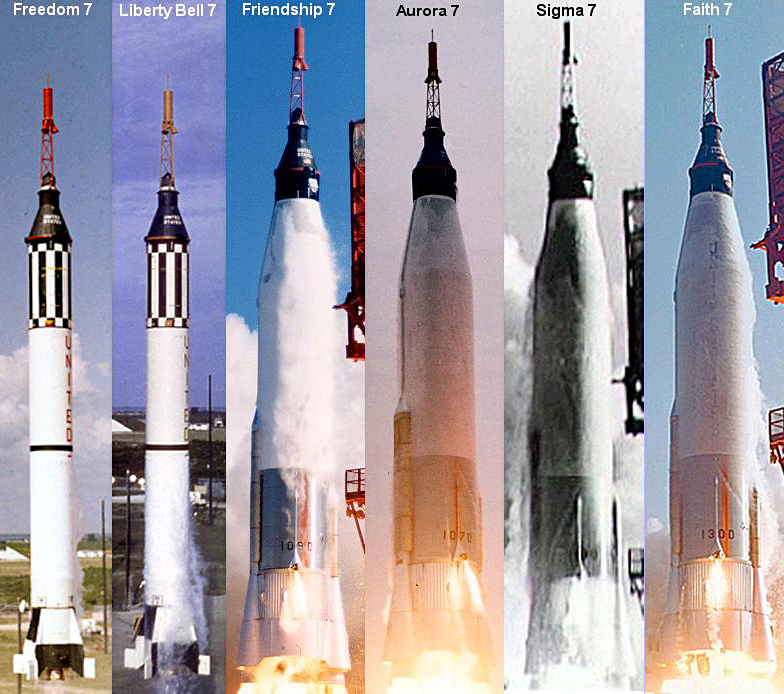
There were six Mercury flights, of which the first two (at the left) were both short, 15-minute-long sub-orbital flights following parabolic arcs briefly passing the border between atmosphere and space. The final four placed their single astronaut into Earth orbit before landing in either the Atlantic or Pacific Oceans via parachute. While the two kinds of rockets look different, Redstone (the two left ones) and Atlas (the other four), both developed from those which could be used to carry nuclear weapons. And those, in turn, had been achieved based on German rocket designs captured after WWII.
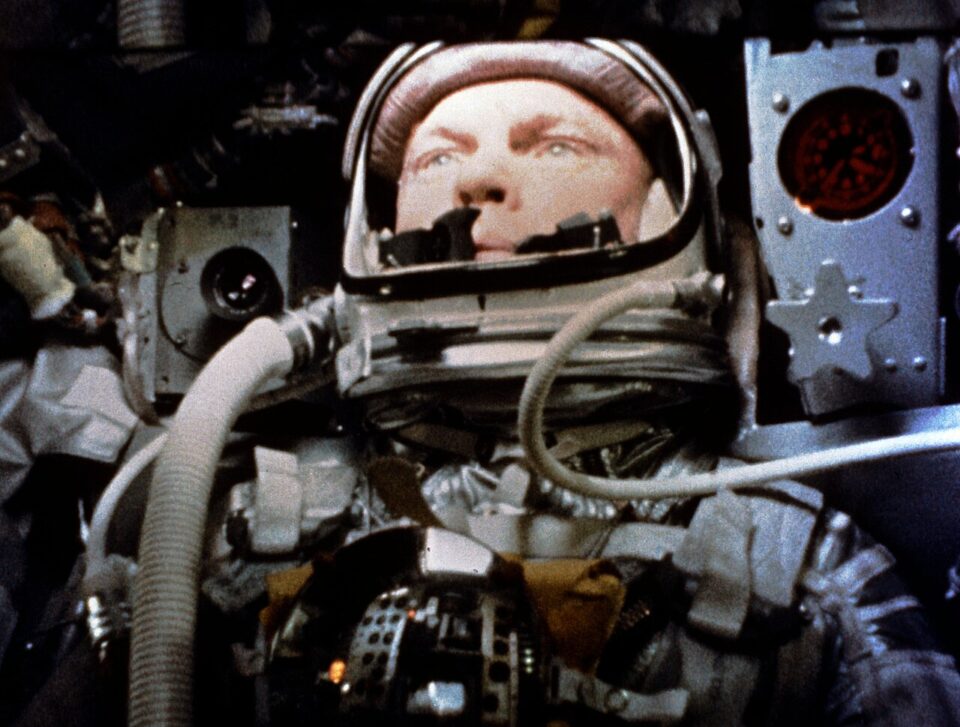
John Glenn (1921 – 2016) was the first American to actually orbit Earth in his Friendship 7 capsule on 20 February 1962. He later went on to become a US Senator from the state of Ohio, and later returned to space on 29 October 1998 onboard the space shuttle Discovery in the rôle of “test subject.” His participation was based on comparing the effects of space on the human body as opposed to the effects of aging. By doing so, he became the oldest person at that time, 77-years-old, to fly in space.
Mercury showed people could actually work and survive being in space, so the next step was to work toward how astronauts would get to the Moon. By now the actual plan of taking a small lander spacecraft to the surface from the main one in lunar orbit had been decided on. This involved being able to maneuver and join, or dock, two spacecraft together both in Earth orbit, but also while at the Moon.
The goal of Project Gemini was to fulfill this requirement of learning how to rendezvous two spacecraft while traveling at very high orbital speeds as well as being able to successfully connect them together. While Mercury missions only had a crew of one, Gemini had two astronauts onboard, which refers to twin brothers from ancient Greek mythology.
In order to be able to get their space capsule lined up with a second target vehicle, the Gemini spacecraft was extremely maneuverable. Flying in it was like being in a sports car as compared to the more sluggish Mercury capsule. Since this lunar landing method involved bringing two spacecraft together, there was always the possibility they could not be connected directly. This meant a “spacewalk” would be necessary to transfer from the one to the other.
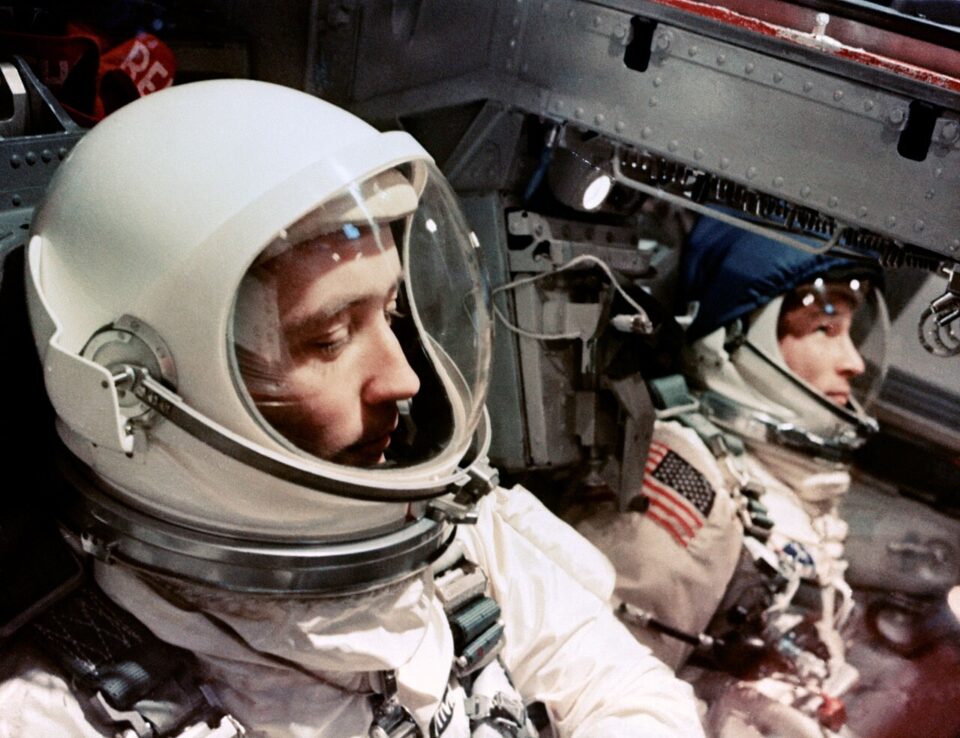
Similar to sitting in the front seat of a family station wagon, Gemini IV’s (left to right) James McDivitt (1929 – 2022) and Ed White (1930 – 1967) are seen participating in training for their June 1965 mission.
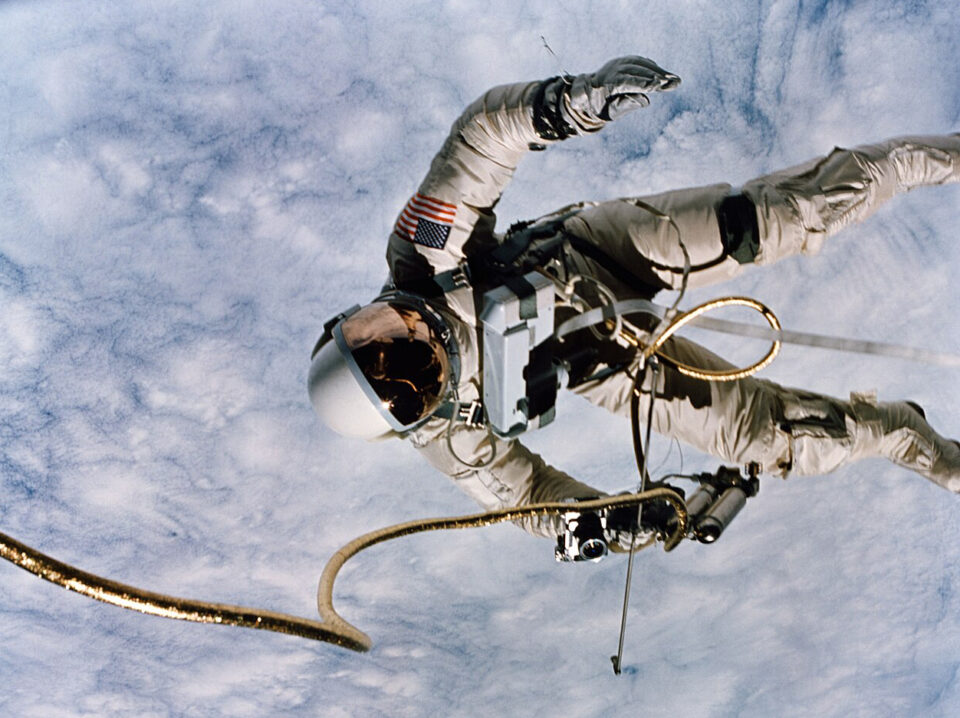
And what a mission it was! Ed White became the first American astronaut to perform a spacewalk on 3 June 1965. In his right hand is a maneuvering device which used pressurized gas to help him change his direction as he flew at 28,260 km/hour along with his and McDivitt’s spacecraft.
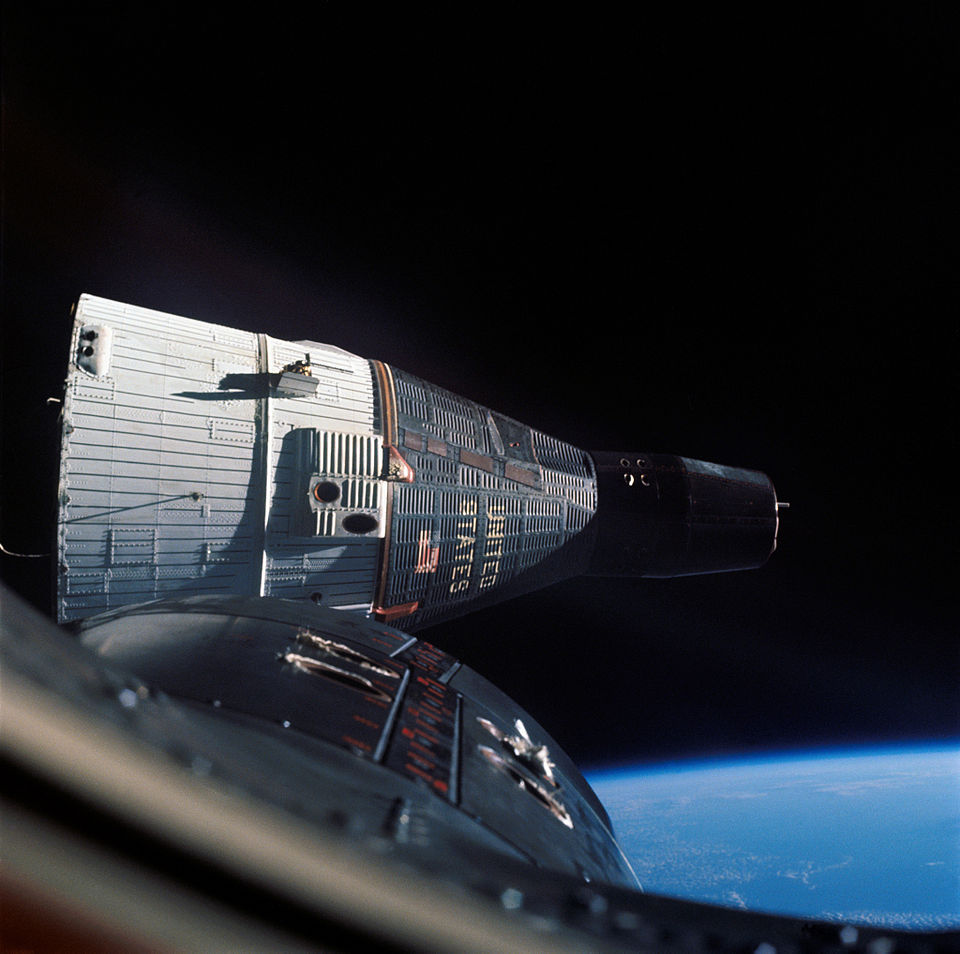
As mentioned, another part of Gemini was learning how to bring two different spacecraft together and, in the case of the upcoming Apollo lunar landings, physically join them together so crew members could go from one spacecraft to the other. Here we can see Gemini VI-A (foreground) and Gemini VII together, with blue Earth in the background. Note the thin dark blue edge. That’s how thin our atmosphere is when compared to the planet itself. A good analogy to this can be seen with a regular classroom Earth globe. The transparent coating on its surface protecting it from, for example, fingerprints is about as thick in comparison as the real atmosphere is to Earth.
After ten Gemini missions, which tackled longer and more difficult flights including more spacewalks, it was time for the actual Moon landings. First, however, there were some tests to be made of the Apollo spacecraft.
Project Apollo, like those of Mercury and Gemini before it, continued by taking incremental steps designed to reach the final goal of the actual Moon landing itself. Missions began carrying their crews of three astronauts with Apollo 7 and its two-week-long in-flight test of the Apollo space capsule and its supporting service module (known together as the CSM). Apollo 8 went to the Moon to test a long-distance mission, the onboard computer to get there and back again, and the day-to-day operations at Mission Control. Apollo 9 tested the Lunar Module (LM) lander designed to travel to the Moon and perform the actual descent and landing. Apollo 10 flew a “full dress rehearsal” to the Moon, with its LM going part way down toward the surface before turning around and returning to the CSM for the flight back to Earth. Two of the astronauts onboard this practice-run would later make their own real landings on later missions: Apollos 16 and 17. Three other landings were originally planned, but then cancelled.
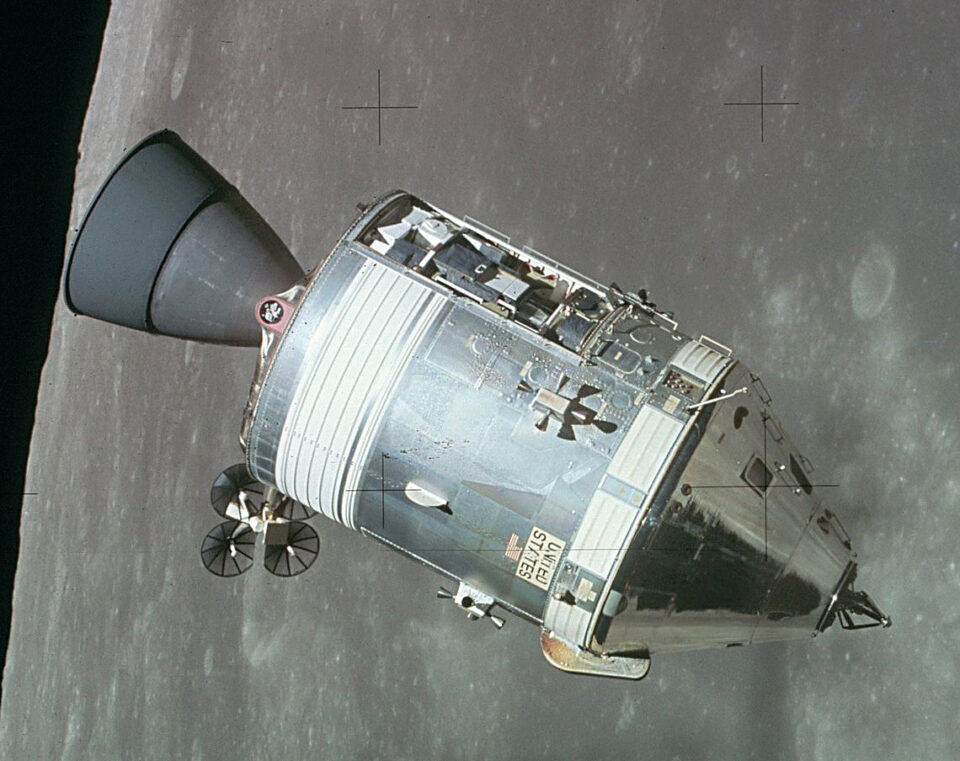
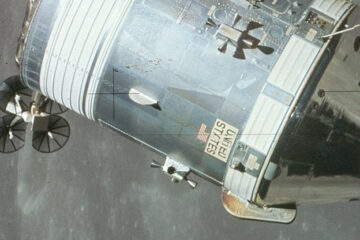
This is an Apollo Command Service Module (i.e., CSM) above the Moon’s surface. One of the most beautiful spacecraft I know of, the resemblance of the Orion Crew Module (CM) and European Service Module (ESM) to it are no accident. The “gum drop” shape of the crew-containing spacecraft is one of the best for launching into space as well as making the fiery reentering through Earth’s atmosphere on the way home again.
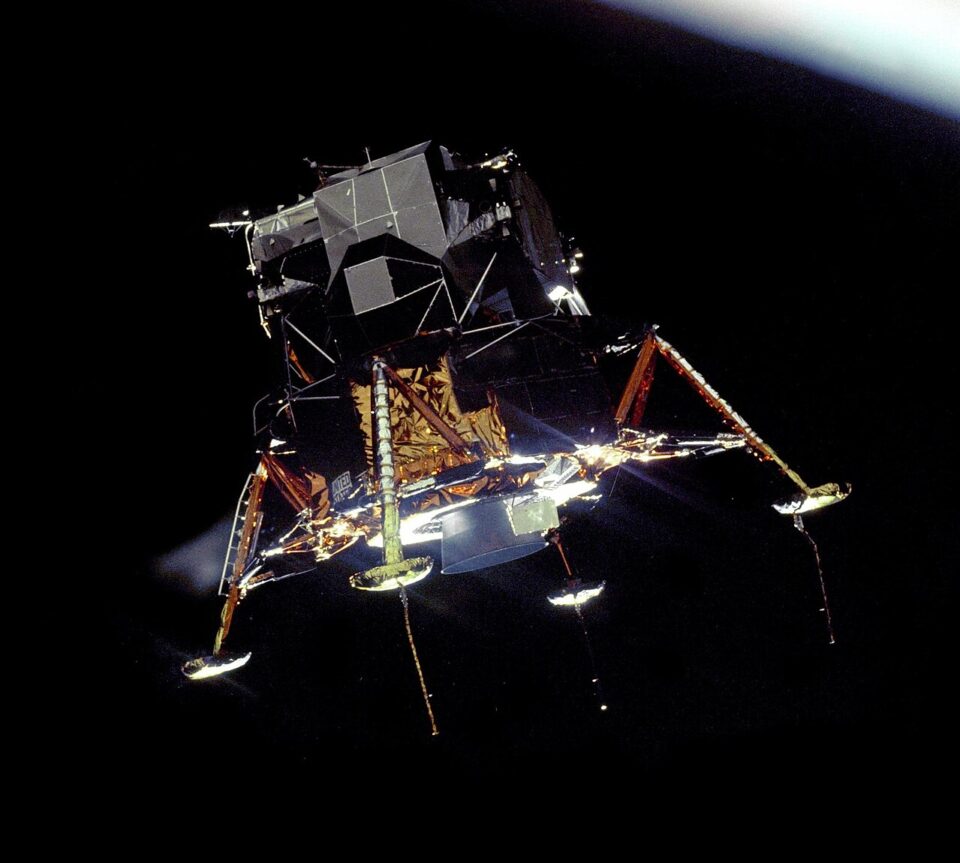
Apollo 11’s LM Eagle, with Armstrong and Aldrin inside, does a little “pirouette” in front of CM Columbia before heading off on its way for the historic first landing on another world on 20 July 1969. The purpose of this maneuver is to make sure all four of its legs are open and locked in position. Note the thin rods extending from three of the four legs. These touch the ground first and let the astronauts know they have landed, so they can turn off the rocket underneath Eagle to let it drop down the rest of the way to the surface. The force of this fall causes these three rods to bend out of the way.
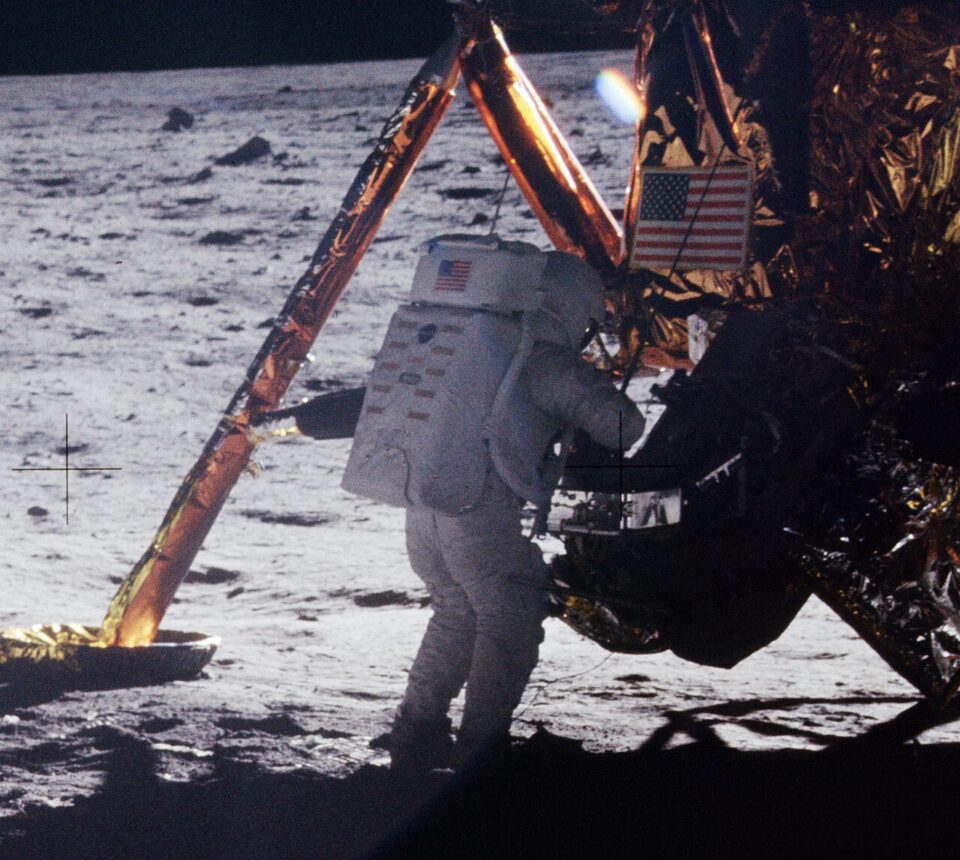
Civilian astronaut Neil Armstrong, the first person to set foot on the Moon, is seen working at the equipment bay of Eagle, the Lunar Module he and Edwin Aldrin rode to the lunar surface on 20 July 1969.
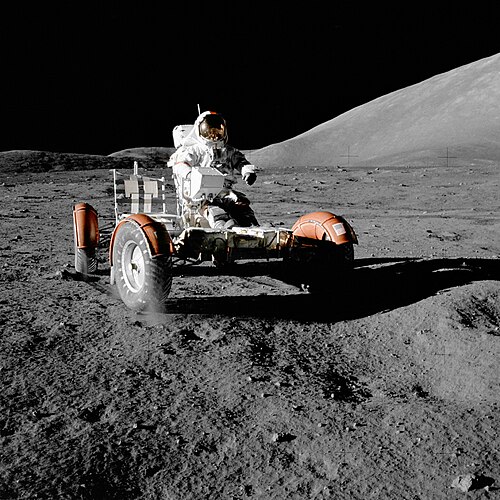
Apollos 15, 16, and 17 also carried in their LMs’ equipment bays a little battery-powered car known as the Lunar Rover. Designed to allow the astronauts to travel farther on the surface to collect more lunar samples and visit places to far to travel by foot, Apollo 17’s Commander, Gene Cernan, is shown in the driver’s seat.
One thing to keep in mind with the upcoming flight of Artemis II, whether it be in February or as late as April, they aren’t landing on the Moon. That won’t happen until a future Artemis mission in 2027, or 2028, according to experts. In the meantime, there will no doubt be lots to follow as this latest program for returning humans to the Moon continues.
By: Tom Callen