Space News
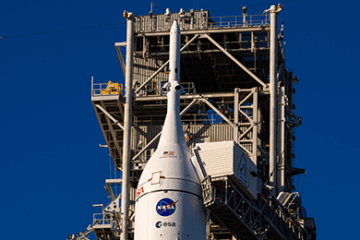
What’s (not) up with Artemis II?
The first manned moonshot in 54 years is delayed Back on 20 January, I wrote that NASA’s planned first return to the Moon with a…

The decline in the number of young people choosing further studies and careers in STEM-related (Science, Technology, Engineering and Mathematics) subjects is a challenge for organizations like ESA, as well as for the whole of Europe as a knowledge-based society and economy. There is also a need to increase a general interest and education in these subjects in order to achieve a sustainable society.
In response to this, ESA’s Education Office created the European Space Education Resource Office (ESERO) project. This project uses European space exploration as a means of exciting young people about Science, Technology, Engineering and Mathematics (STEM).
ESERO is addressing primary and secondary education in Europe through its ESERO Offices.
ESERO offices have been initiated and developed in different ESA Member States. The formation of ESERO offices throughout the Member States was based on the assumption that the most effective form of space-based education is the one that supports the specific educational needs of the various Member States, all having different educational systems, different school curricula and, last but not least, different languages.
Each ESERO office is staffed by experts, well integrated into the local education system and networks. This allows ESA Education to support the individual needs of each of the Member States, while simultaneously having access to those national networks of teachers associations, science centers, space industry, acadmia etc.
The primary function of the ESERO office is to create and grow enthusiasm and excitement for European space exploration among students and inspire the next generation to pursue STEM careers. The ESERO project also aims at raising young people’s awareness of Europe’s space programme and of its importance for modern society and economy.
The first manned moonshot in 54 years is delayed Back on 20 January, I wrote that NASA’s planned first return to the Moon with a…

HST captures a unique view of a star’s dying stages When I first looked at the picture of the Egg Nebula associated with this week’s…
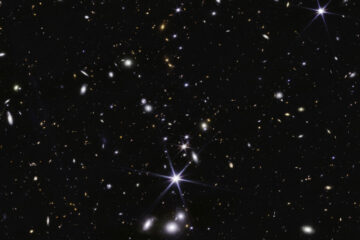
The Webb space telescope continues to push boundaries Ever since German-Dutch spectacle-maker Hans Lipperhey (c. 1570 – 1619) tried patenting what we know today as…

We’re slowly leaving winter behind, one-sunrise-at-a-time When one has a cat at home who thinks the time for her breakfast is in the early morning…