The Moon too soon?
NASA is talking about the next steps to a permanent Moonbase
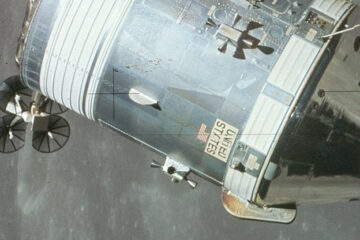
Earlier this year, NASA’s Artemis II mission had its first successful flight with a crew onboard; a looping flight around the Moon and back again. This same feat was also carried out by Apollo 8 back in late December 1968, bookending the first and the most recent times this took place.
Originally, Artemis III was supposed to be the first crewed Moon landing since Apollo 17 did so in December 1972. Instead, NASA has decided to add another, follow-up Artemis mission to the schedule. Artemis III is now going to be a flight in low-Earth orbit to test the Human Landing System (HLS) for the Moon. Another contributing factor to the actual lunar landing delay are issues in developing SpaceX’s Starship heavy-lift launch vehicle that would be involved in a landing.
If all goes according to plan, Artemis III will take place sometime in 2027, which means the first possible scheduled Moon landing via Artemis IV could take place no earlier than 2028. One thing driving this timeline is that the United States would like to get Americans back on the Moon’s surface again before the current president leaves office on 20 January 2029.
Let’s put this into perspective. In September 1962, President John F. Kennedy set the original goal of putting a man on the Moon and bringing him safely back to Earth by the end of 1970; the end of the same decade in which he proposed it. It was a national goal the president believed would have both long-ranging scientific and technical benefits for the nation. Kennedy was a popular president. Had he not been assassinated in November 1963 and been re-elected to a second term in November 1964, Kennedy would have left office in January 1969. The first Moon landing took place later that year in July, so there was no way he would have been currently in office for this historic event.
Considering the complexity and the risks involved with both the equipment and the mission itself, only time will tell what actually sets the schedule for a landing on the lunar surface, not a politically driven mandate. If anyone has any doubts what cutting corners leads to, consider the Soviet Union’s own failed efforts to put one of their cosmonauts on the Moon in what’s referred to as the Space Race with the United States.
Another factor to take into consideration is China, who has also begun to have a successful space program of their own. Their goal is to put taikonauts (i.e., Chinese astronauts) on the Moon in 2030. And they’re not necessarily waiting around for anyone’s permission to continue with their space program. Last Monday, that nation launched its Shenzhou-23 spacecraft, which sent a crew to their Tiangong space station in Earth orbit. It seems, in essence, that there is a whole new Space Race underway.
March of this year NASA announced plans for a $20 billion program (about 185 billion Swedish kronor at today’s exchange rates) to build a permanent Moon base run on nuclear power and solar energy at the lunar South Pole by 2032, or less than six years away. One of the important things about this part of Earth’s satellite is this is where evidence for water ice has been found, either hidden in the shadows of crater walls, or just beneath the regolith, or lunar soil. This can be used for both drinking, but also changed from H2O into its elemental components of oxygen for breathing, and hydrogen—used for a variety of purposes—by using electricity-powered electrolysis.
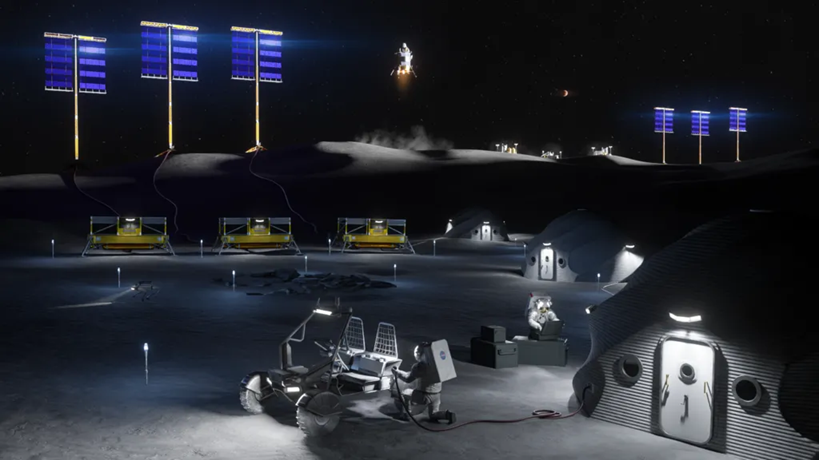
As you may well guess, quite a lot has to happen both in terms of spacecraft development and the actual logistics of building such an outpost. In this NASA artwork of what it could be like, shown are rovers for traveling around the lunar surface, habitats to live in, and towers with blue-colored solar panels on them sticking up above the rim of the crater they’re inside. With any complex task of this scale, the American space agency will approach it in steps, with the initial one in the hands of robotic exploration. The day after the Chinese made their space station-bound flight, NASA announced the awarding of contracts to three companies—Astrobotic, Blue Origin, and Intuitive Machines—to design and build them. Their lander and hopping robot creations would be used to initially map the difficult lunar terrain to help those back on Earth decide the best place for such a settlement. Two days later, Thursday, a Blue Origins “New Glenn” rocket blew up during a “hotfire test” on the launch pad at Cape Canaveral, Florida, something the company called an “anomaly.” Expensive teething pains to be sure.
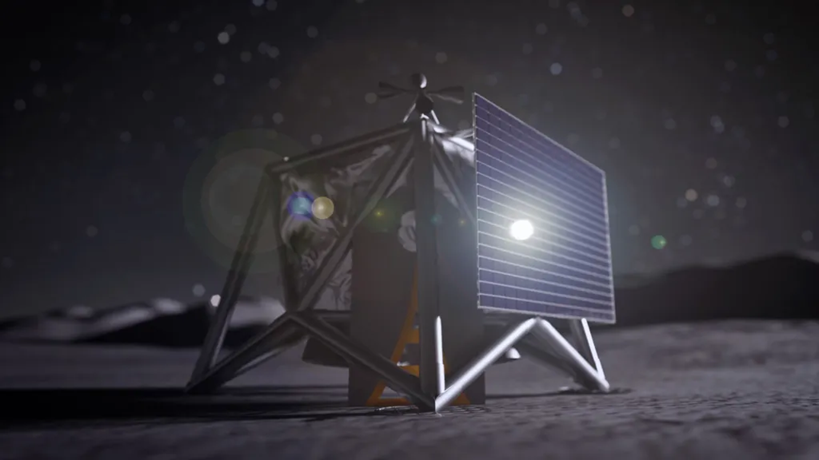
Here we can see a static lander, powered by the Sun, sitting on the Moon’s surface and surveying its surroundings. This phase and all other aspects of said robotic exploration should last until 2029, and would include up to 25 launches, and deposit 4 metric tons of cargo on the Moon according to NASA’s Moon Base program head, Carlos García-Galán.
No matter how good a job the robot explorers do, or how much payload is put on the lunar surface, the one outstanding problem is NASA’s ability to actually physically put astronaut’s feet on the Moon. Elon Musk’s SpaceX has the US government contract to build the Starship Human Landing System, but has had a number of setbacks causing delays.
According to one British lunar scientist at the United Kingdom’s public research Open University, he would not be surprised if China got there first considering NASA’s current problems. Again, a significant key to all this is that you have to be able to get people both safely to the Moon and then down to the surface. And the American space agency, feeling the political pressure at home, has to start somewhere. The best thing to do is announce plans are starting to formulate. And that’s where the “devil’s in the details.” Even the best laid plans don’t always go according to the way you want. Spoiler alert: they didn’t do so in the 1960s either in spite of best intentions.
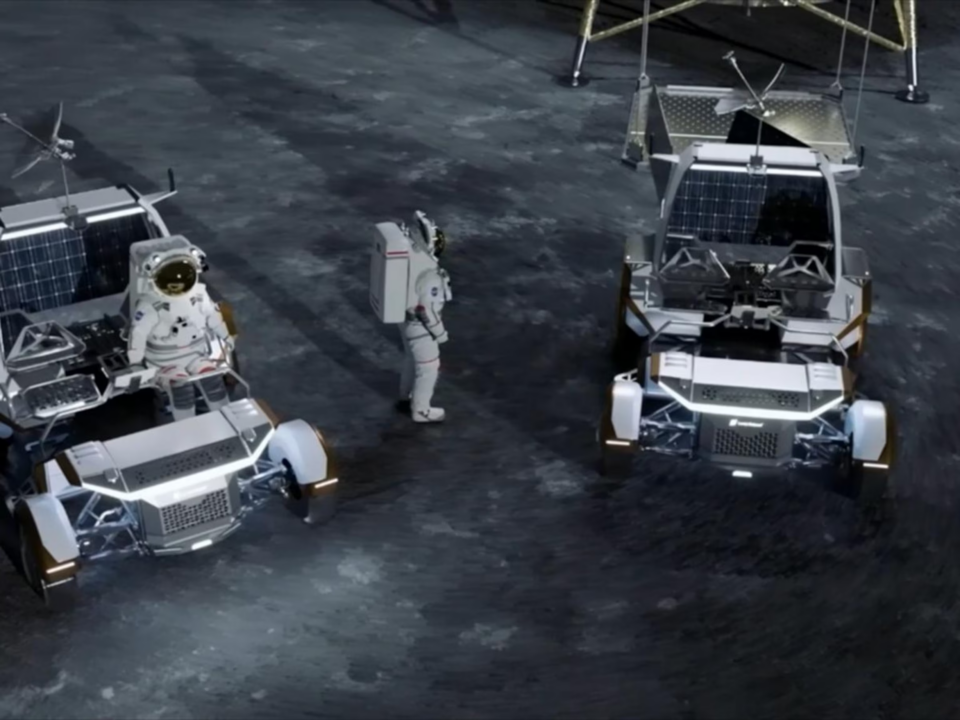
There’s one more factor not a part of the current mix. The “Chariots of Apollo” and all that that entailed, including its spirit, won’t be going with them.
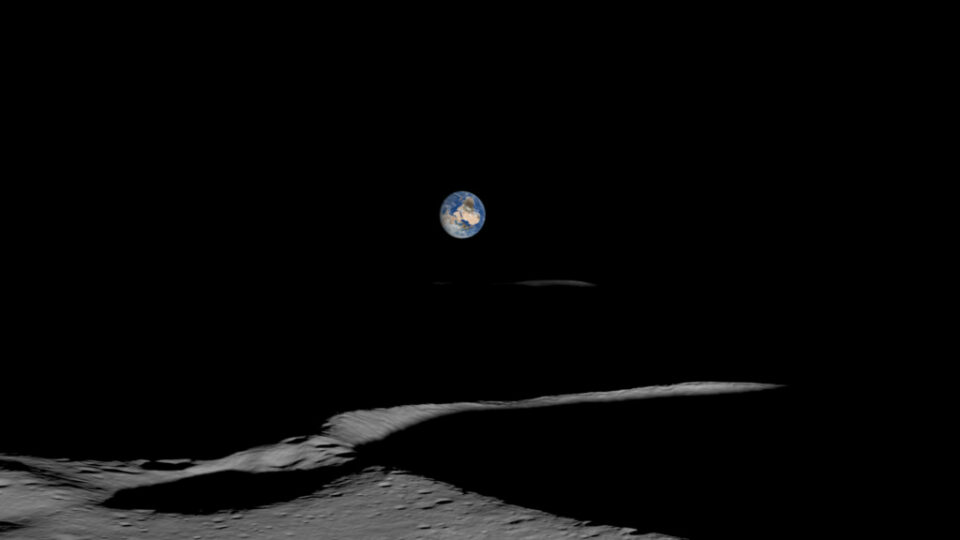
If and when astronauts finally reach the Moon’s South Pole, they’ll have a unique perspective of their mother world from which they recently came. Look closely at this artist’s view made from the crater Shackleton, named after the famous Antarctic explorer, Ernest Shackleton (1874 – 1922), and you’ll see it too.
By: Tom Callen