Earth’s Moon in the news again
A new, naturally-created crater
While we’re used to seeing the Moon on a regular basis in the night sky, it’s not so often that it makes an appearance in the news. Contrary to that, however, is it has appeared in the news more frequently in the last few weeks. Back at the end of August I covered the unplanned crash of the upper stage of a Falcon 9 rocket into the lunar surface, creating a manmade crater later photographed by NASA’s Lunar Reconnaissance Orbiter (LRO).
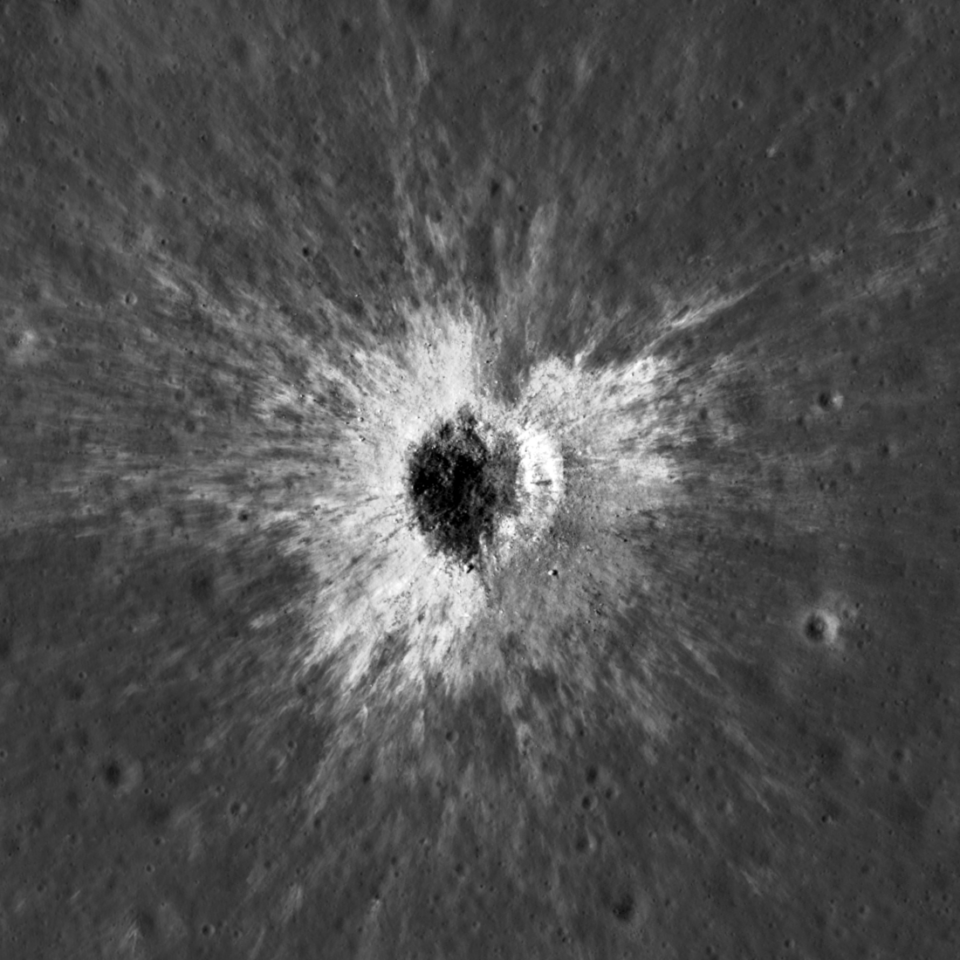
Not to be outdone, Mother Nature has been revealed to have made a crater of her own as well, something which caught researchers completely off guard. What makes it all the more exciting was that this lunar feature is the largest newly-formed crater ever found in the solar system over the decades we have sought to monitored them. For example, back in the days of the Apollo Moon landings, those geologists helping to plan their locations wanted to have some idea how often objects of all variety of sizes hit our satellite’s surface. Prior to this latest find, the largest contemporary crater ever found was 70 m in diameter, whereas this just announced discovery is about 222 m across, or some three times larger, and about 43 m deep; or about five times wider than it is deep.
Looking at the Moon it could be a natural assumption that it’s a dead body with no active changes going on, but that’s not the case. One of the tasks of NASA’s Lunar Reconnaissance Orbiter is to look for new craters on Earth’s natural neighbor as well as things like landslides and new cracks in the surface caused by internal motions.
Here’s what’s been determined about this latest discovery from what’s understood about it so far. Two years ago, sometime between 11 April and 22 May 2024, either an asteroid or a comet, thought to be the size of a building between three and six stories tall, smashed into the Moon’s surface at its eastern edge. Somehow researchers failed to spot it then, but it was noticed in a comparison between two images taken at least six months apart from one another by LRO’s Wide Angle Camera (WAC). Not only was there a span of time between when they were captured, but the photo also had to cover the same part of the lunar surface under the same lighting conditions caused by the Sun. This helps eliminate any ambiguities due to shadows on the Moon, which are very strong since there is no atmosphere to help diffuse them, like on Earth.
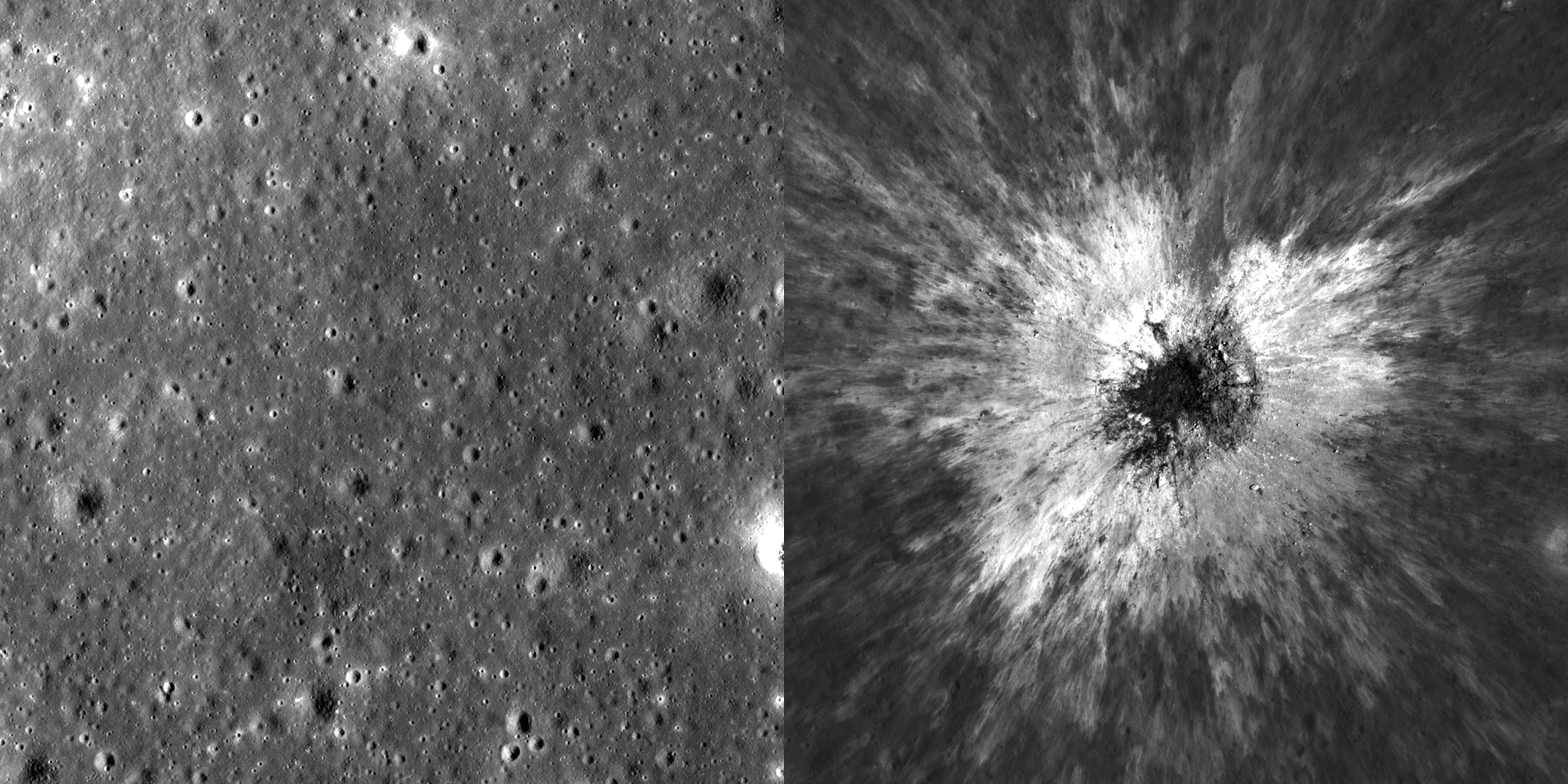
Later on in the summer of 2025, the LRO team checked the database of that reconnaissance satellite’s Narrow Angle Camera (NAC), finding several pictures of the same area before the new crater was formed, but, most significantly, none after. This GIF animation shows both before and after views of the site.
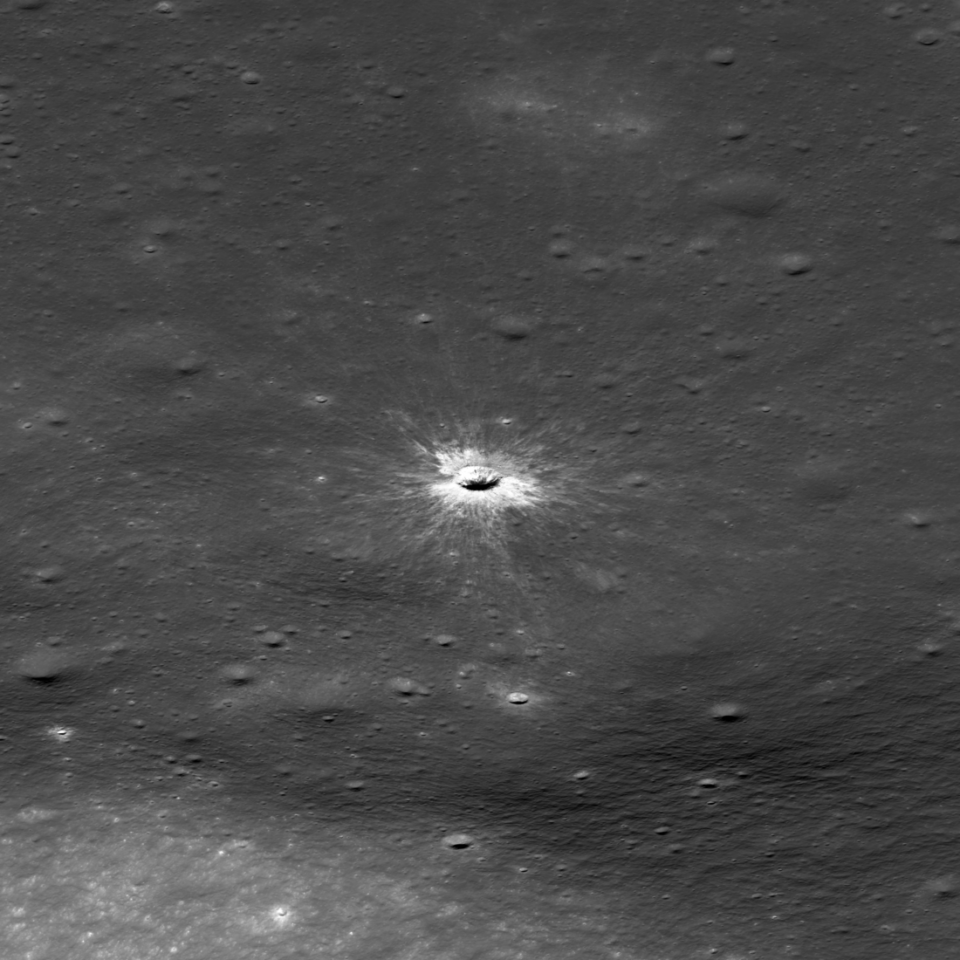
In this view, the LRO rolled over eastward 51°, which allowed its camera to take an impressive oblique view, with the Sun at a higher angle to allow more details to be seen. For six months the Narrow Angle Camera took pictures of the new crater, which can only happen during a few days each month because of LRO’s orbit around the Moon. These were made when the Sun was both high, in-between, and low relative to the lunar horizon, which can reveal different features because of the change in surface reflection. Stereo images made from photo pairs allowed elevation maps of the surface to be made, with all of the data gathered leading researchers to conclude how important of a find this really was.
Some of these include just how far there were disturbances in the Moon’s surface as a result of the impact creating the crater; up to 100 km away. Another result was that the crashing body—the asteroid or the comet—hit at a steeper angle than had been previously thought; over 10° as compared to about 2°. When an impact crater is made, the material blown out of the new hole is deposited again in the form of what are called ejecta blankets, which lie close to the crater’s edge, or rim. In this case, it appears there were at least two waves of ejecta thrown out across the lunar surface, some of it to substantial distances. This could be important in understanding the subsurface at the impact site.

The new crater has had the proposed name “McGetchin” forwarded to the International Astronomical Union, the organization which is responsible for naming objects and bodies in the solar system. These could even include new asteroids, comets, dwarf planets, and the satellites of planets. It’s more than fitting to honor Dr. Thomas R. McGetchin (1936 – 1979), who was a pioneering lunar scientist during the Apollo era of lunar exploration, particularly in astronaut training, mission planning, and was involved with others in suggesting the landing site for Apollo 17, the final manned landing made in December 1972. His research made significant contributions to understanding impact cratering mechanics, plus lunar volcanism.
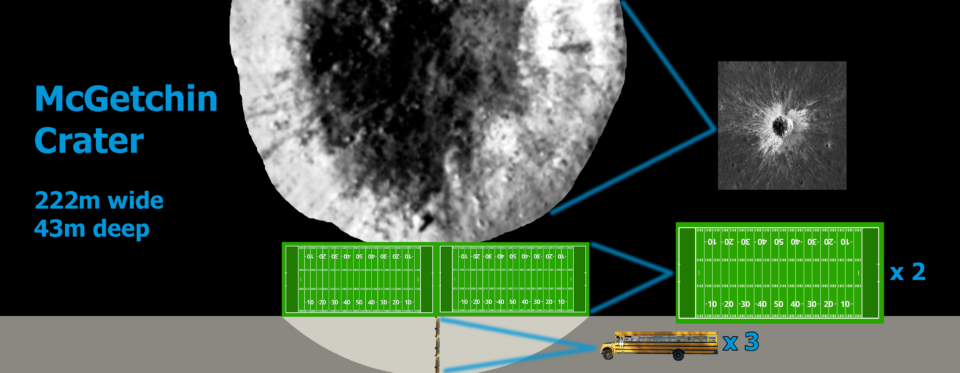
In closing, let me leave you with my basic diagram of what the cross-section profile of the new McGetchin Crater might look like. Dominating the top center of the diagram is a vertical view from LRO of the crater, whose diameter is in comparison to two American football fields; about 222 m in length between them. The dark gray band along the bottom represents the lunar surface in profile, while the light gray represents the freshly-scooped-out crater, though in reality it’s probably not very bowl-like. At 43 m deep, that’s about the same amount as three yellow American school buses (perhaps as seen in TV shows or movies) stood on top of one another.
By: Tom Callen