In orbit with Sweden Solar System
A new app makes an old astronomical friend even more accessible
Ever since we humans looked at the night sky and began to understand what we were seeing, one of the hardest things to grasp was how large, how far away everything was from us. To help us do so, all sorts of different methods to represent, for example the solar system, were created.
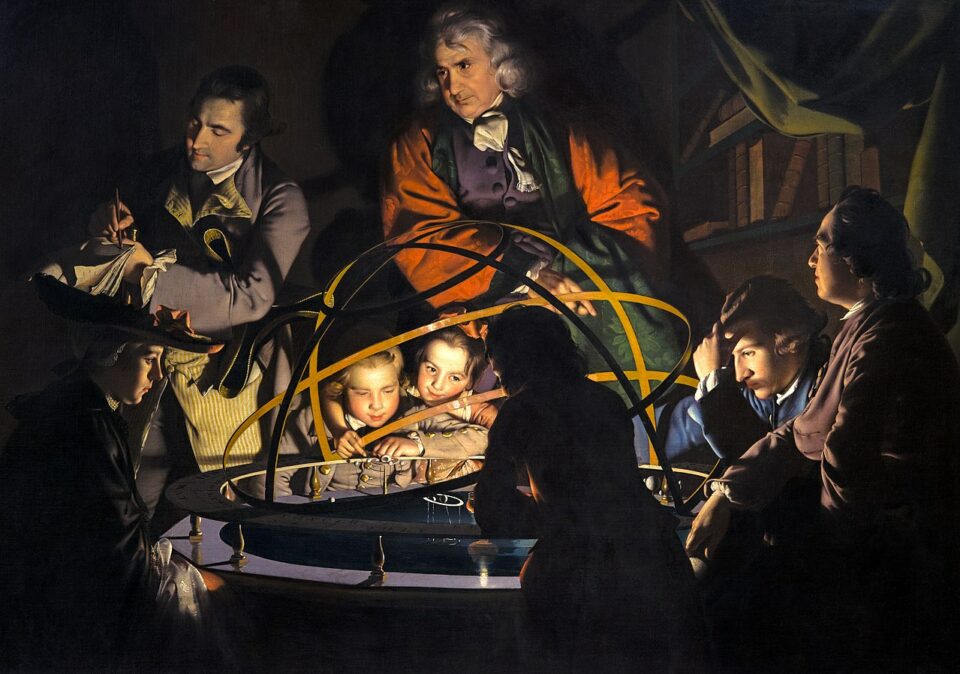
One such way to do so was through the invention of a device called an orrery, a mechanical representation showing the planets in their orbits as they made their way around the Sun. Having worked in planetariums for four decades, this painting, sometimes called “The Orrery,” by Joseph Wright (1734 – 1797), has long been a favorite. A lantern has been substituted for our star in the center, and if you look carefully, you can make out the planet Saturn, it rings, and some of its moons directly in front of the children left of center. If you’re even more observant, you will also note there are no other outer planets beyond it. Why is that? Because at the time Wright painted it around 1766, Uranus hadn’t been discovered yet, nor would it be so until 1781.
If you’ve visited some natural science museums, science centers, or planetariums, you may have seen that some of them have made representations of the Sun’s family where you can walk from one body to another, though it can be tricky to get the relative distances between the planets themselves and their sizes. Sometimes one has to be compromised over the other, especially when dealing with a limited room.
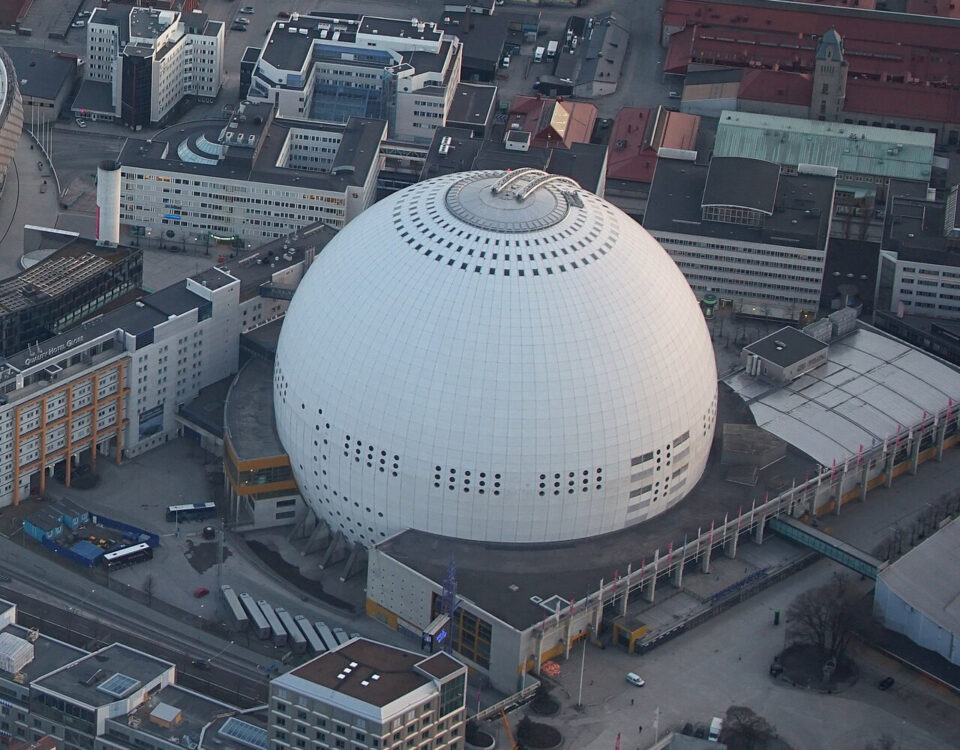
Not so with the Sweden Solar System, which uses the realm itself as the “tabletop” on which it’s all spread out to scale. Where does it begin? With the Sun itself, represented by the Avicii Arena in Stockholm. Formerly known as the Stockholm Globe Arena, and after that as the Ericsson Globe, most everyone around the city refers to it as just “Globen.” With a diameter of 110 meters, it’s the second largest spherical building in the world after the MSG Sphere in Las Vegas, Nevada, at roughly 157 m. But when Stockholm’s very own opened in 1989, it was at the top of the list. To get an idea of just how large this building is, look how Globen compares to the cars and trucks on the streets around it in the photo. That 110 m represents the 1,392,530 kilometer diameter of our parent star, and the rest of the Sweden Solar System is scaled from there. How far does it extend? From Malmö in the south all the way to Kiruna in the north, or about 1,400 km, making it the world’s largest permanent representation of the Sun’s family.
If you happen to live around the capital city, it’s fairly easy to personally visit the Sun, Mercury, Venus, Earth, asteroid 433 Eros, Mars, asteroid Vesta, with gas giant Jupiter at Stockholm Arlanda Airport.
Now there’s an even easier way to visit each and every object included in the Sweden Solar System (I’ll use “SSS” for brevity from now on) via a colorful, interactive app created by Gabriel Gumucio, a board member of the Swedish Astronomical Society.
Start by scanning this QR code to download the app from the App Store or Google Play for either your iOS- or Android-based device, and then install it, which takes less time than it does to read this paragraph.
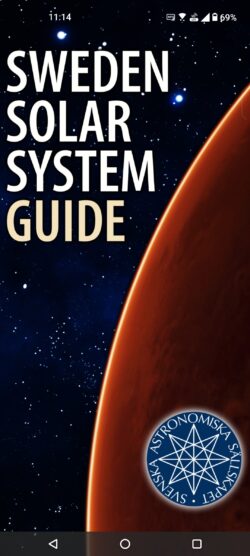
Opening up the app, this is the first screen you’ll see while it’s starting up, followed by the SSS map showing Sweden with individual icons representing the objects it contains.
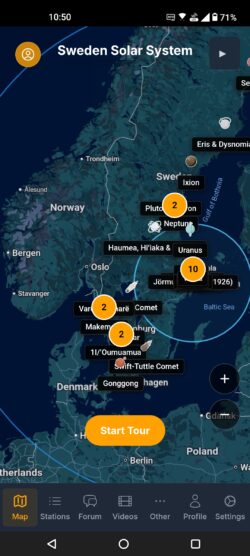
Once you start to investigate this app, you’ll see more and more of what it’s capable of. Looking at the bottom of the screen you can see the options of “Map,” “Stations,” “Forum,” “Videos,” “Other,” “Profile,” and “Settings.” “Map” is pretty self-evident, and you can zoom into it just as you would any other active map on your device.
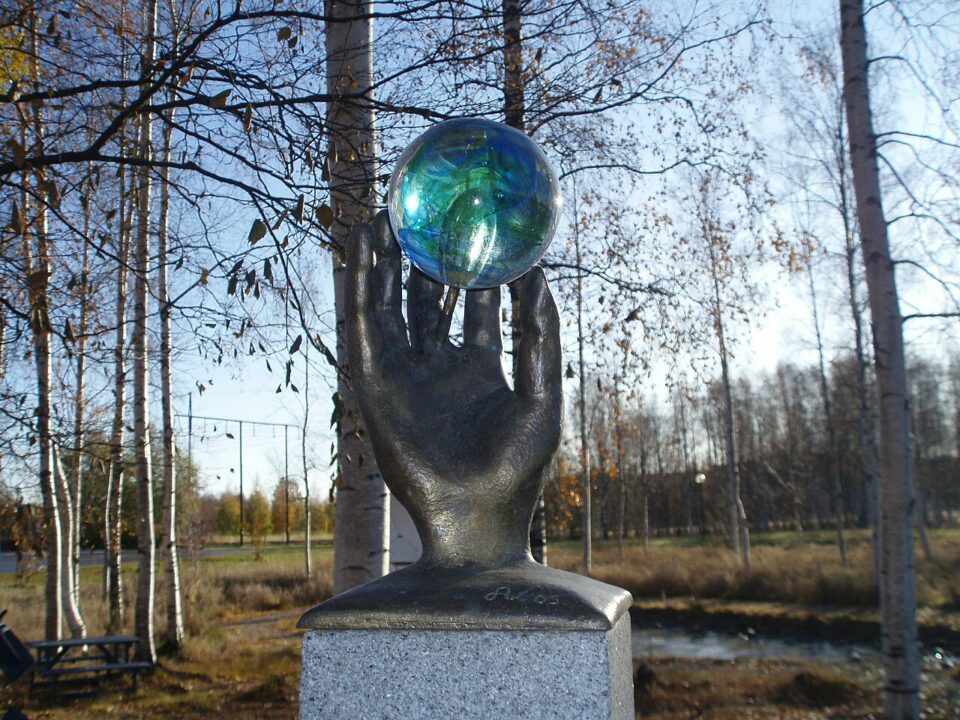
“Stations” are about the individual objects found in the SSS, and includes things like where they are located, photos taken by app users, visitor’s reviews, plus information about the astronomical objects themselves. Here we can see the SSS dwarf planet Sedna, one of the prettiest models to me, which is located in Luleå, 733 km away from the “Sun.” “Forum” is a place where users can discuss issues about the SSS with one another, functioning like any other forum you’d be familiar with. “Videos” is very useful as it contains links to YouTube clips exploring how to use the app and other subjects.
“Other” contains a number of things, such as Quizzes, Top Space Explorers, “Popular Astronomy” magazine, Badges you can collect from your SSS activities, and about the Swedish Astronomical Society. “Profile” is where you have the possibility to create a user account to track your progress using the SSS app, and to earn points along the way. Last, but not least, is “Settings,” where you can select the language displayed (Swedish or English) and practicalities, like the units of measurement as either metric or Imperial, etc. As I said, there’s quite a lot here once you begin to explore what the app contains.
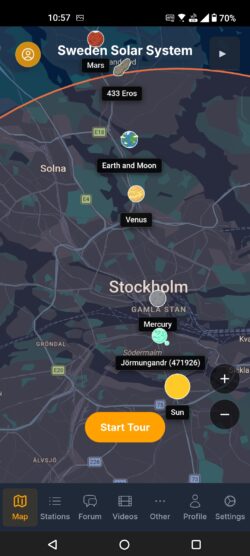
Here, by way of a closing example, is part of the tour of the solar system object’s, out to Mars, found in the Stockholm area, made by zooming into the map. And if you tap on one of their images, it will take you directly to its “Stations” page to read more about it.
Good luck with your Sweden Solar System explorations; you know you’ll want to try and visit all of them!
For more general information at the Sweden Solar System website (i.e., not the app), follow this link.
By: Tom Callen