Expanding on a human scale
A re-processing of an old Hubble image reveals new details
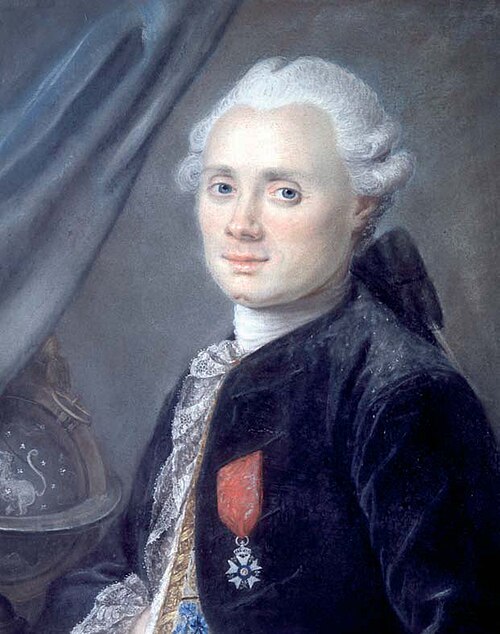
When French comet hunter, Charles Messier (1730 – 1817), was sweeping the bright skies over the city of Paris with his refractor telescope and its 100 mm objective lens in 1758, he came across a fuzzy object while observing a bright comet. Rather than come across this non-comet in the future and mistake it for what he was really searching for, he began to make up a catalogue to include such objects as he found them. Something found could be compared to this list, and either be studied further or ignored.
Since this was the first of these objects, it became object #1, and since it was Messier who created it, this became known as Messier’s Catalogue. Well known to both amateur and professional astronomers, its contents can be referred to in a kind of shorthand everyone understands. If, for example, you are talking about M(essier) 1, both groups of astronomers know the conversation’s about a supernova remnant in the constellation of Taurus, the Bull. Messier’s telescope was nowhere near powerful enough to resolve what he was seeing, but in 1844, William Parsons, the 3rd Earl of Rosse, was observing M1 with his homemade reflecting telescope, one of the largest in the world at the time. Possessing a mirror 0.9 m in diameter, he was able to make a drawing of it at the eyepiece. It had to be reproduced in this way as the newly invented tool of photography was not sensitive enough to capture faint objects.
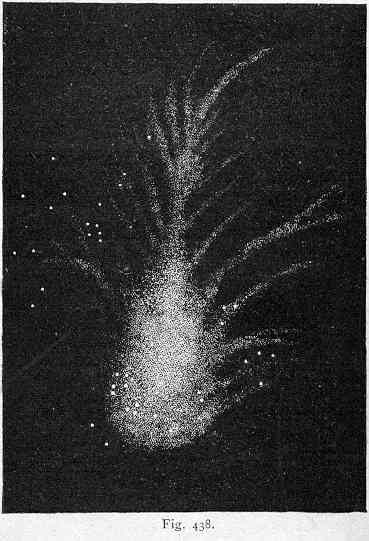
When looking at Lord Rosse’s drawing, what sort of creature comes to mind? If it was a crab, complete with a number of spidery-like legs around its sides, you’d be right. He also thought it looked like a “crab” the first time he observed it, but then not again during observations with a much larger telescope on another night eight years later. The name, however, stuck, and so we know it today as the Crab Nebula. It’s still a favorite target of amateur astronomers, though I will have to say all the times I’ve ever observed it with my own, albeit smaller telescopes, it’s never looked anything like this.
This is the first astronomical object which could be matched to a historically-observed supernova event, specifically that of 1054 CE observed by Arab, Mayan, Japanese, Chinese stargazers as well as Native Americans in the southwest part of the United States. Being 6,500 light years from Earth, it’s been the target of research telescopes both on the ground and in orbit around our planet. This includes the NASA/ESA Hubble Space Telescope (HST), and it has been doing so for so long that we can make a comparison between images of M1 taken 25 years apart.
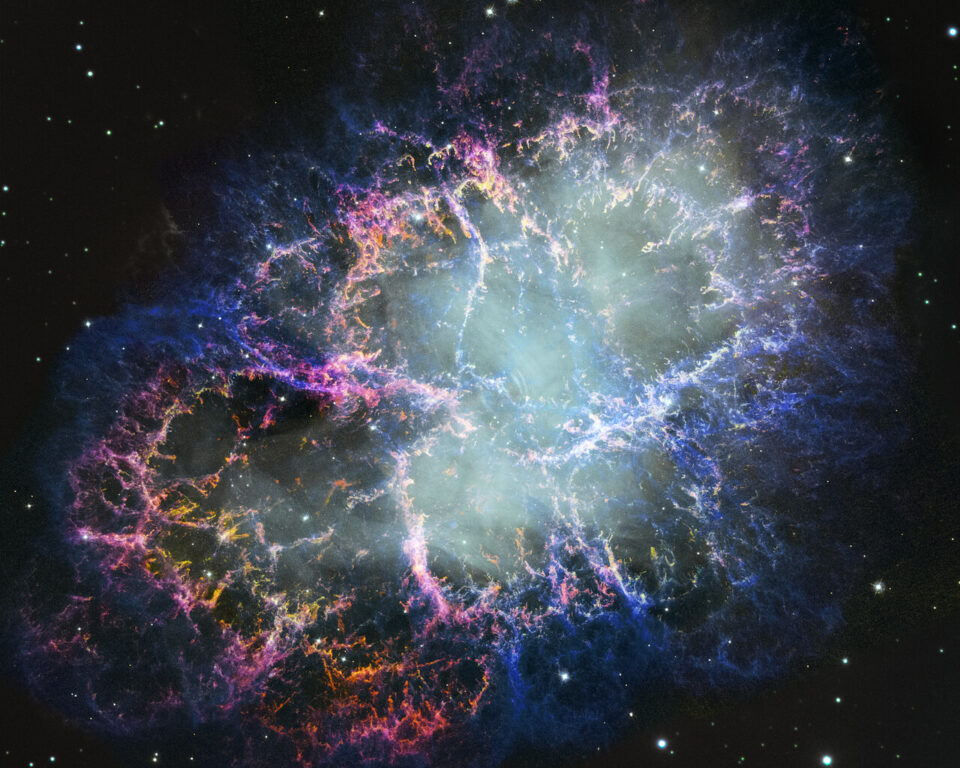
Re-processing an image, seen here, of the Crab taken in 1999-2000 reveals even more details and information than when it was first received from HST at the time. We can see pink-colored wispy tendrils of gas that were blown away from the original star, which are what Lord Rosse observed and thought resembled crab legs. The remains of the exploded star, now a rapidly-pinning super-massive pulsar (a.k.a. a neutron star), is buried in the center of the pale green glow, synchrotron radiation, which is caused by an interaction between the pulsar’s magnetic field and the supernova remnant’s material. Believe it or not, but we humans can also nowadays produce this same type of radiation artificially in some kinds of particle accelerators here on Earth.
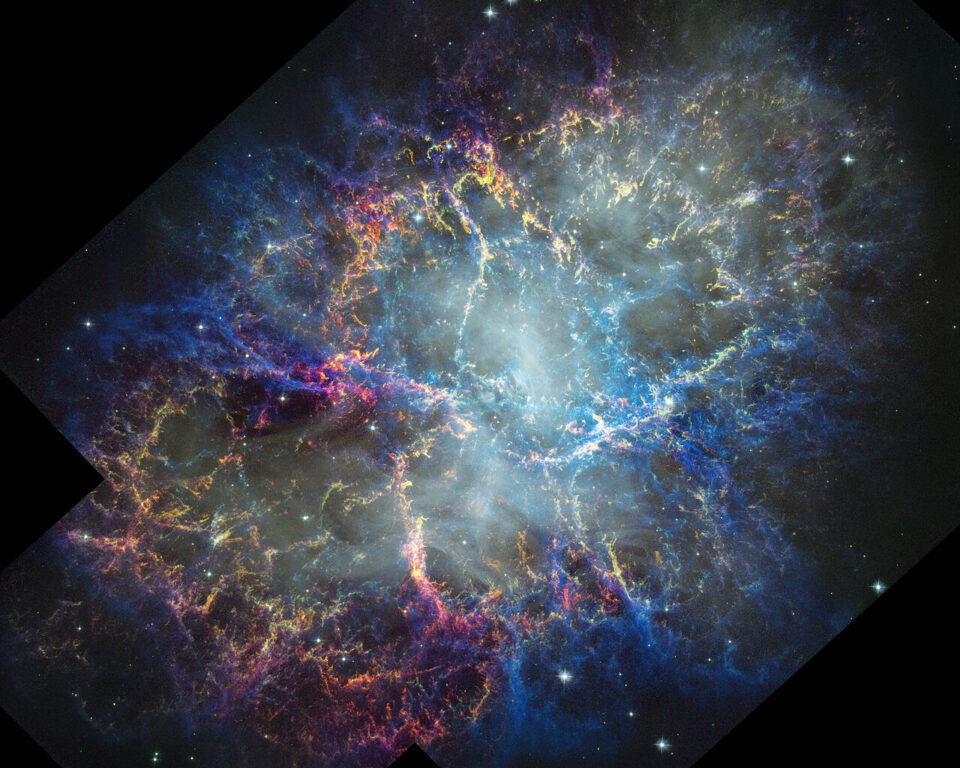
This second picture of M1 shows the Crab Nebula in another Hubble image made 25 years after the other. One of the most noticeable differences is that the Crab has expanded during those years between when the two pictures were taken. Look carefully at some of the bright white stars seen around the edges of the nebula where the filaments are. You should be able to see that some of these thin lines of gas have moved relative to the star’ fixed positions.
How fast are they traveling? At a speed of some 5.5 million kilometers per hour! To put it another way, this is 132 million kilometers every day, or 343 times farther than the Moon is from Earth. Again, in just 2 4 hours. I’ll let you work out what the distance expanded over the 25 years between the two pictures. Not only that, but the astronomers who have studied the two pictures have even been able to note that the outskirts of the Crab have expanded more than those closer to the interior, which would make sense since they are the parts blown outward in the initial explosion that ripped the original star apart.
Additional comparison between the two images made a quarter-of-a-century apart have also shown changes in the density of the expanding material, differences in the local temperature inside the Crab as well as how the chemical composition of the material is evolving. The chemical elements all the way up to iron can form through fusion in the centers of stars, but it takes the violence of a supernova to make the heavier ones above this. Do you happen to have a ring, or something else, made of gold? You can thank a supernova somewhere in the Milky Way Galaxy for making it possible.
Stay tuned as there will no doubt be more to come as observations in different wavelengths of the electromagnetic spectrum from other orbiting telescopes, such as the NASA/ESA/CSA James Webb Space Telescope, will be added to these results to build a more complete picture.
While Charles Messier might have found such fuzzy objects to be included in his catalogue an annoyance, modern-day astronomers continue to be delighted by this long-fascinating object.
For the ESA press release, including more pictures and some video clips, see here.
By: Tom Callen