Space News
To the Moon and back
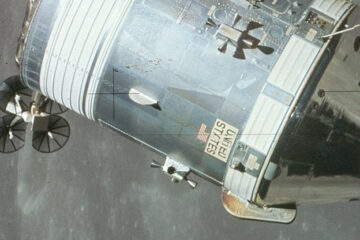
Remembering an Apollo Era pioneer With all the talk these last few years of multiple countries making plans for a new human presence on the…

The decline in the number of young people choosing further studies and careers in STEM-related (Science, Technology, Engineering and Mathematics) subjects is a challenge for organizations like ESA, as well as for the whole of Europe as a knowledge-based society and economy. There is also a need to increase a general interest and education in these subjects in order to achieve a sustainable society.
In response to this, ESA’s Education Office created the European Space Education Resource Office (ESERO) project. This project uses European space exploration as a means of exciting young people about Science, Technology, Engineering and Mathematics (STEM).
ESERO is addressing primary and secondary education in Europe through its ESERO Offices.
ESERO offices have been initiated and developed in different ESA Member States. The formation of ESERO offices throughout the Member States was based on the assumption that the most effective form of space-based education is the one that supports the specific educational needs of the various Member States, all having different educational systems, different school curricula and, last but not least, different languages.
Each ESERO office is staffed by experts, well integrated into the local education system and networks. This allows ESA Education to support the individual needs of each of the Member States, while simultaneously having access to those national networks of teachers associations, science centers, space industry, acadmia etc.
The primary function of the ESERO office is to create and grow enthusiasm and excitement for European space exploration among students and inspire the next generation to pursue STEM careers. The ESERO project also aims at raising young people’s awareness of Europe’s space programme and of its importance for modern society and economy.
Remembering an Apollo Era pioneer With all the talk these last few years of multiple countries making plans for a new human presence on the…
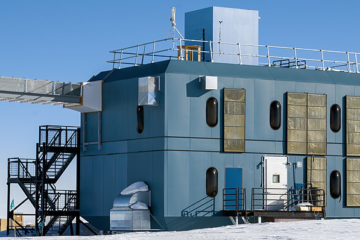
The biggest prize in science for a subatomic particle On 6 October the Royal Swedish Academy of Sciences in Stockholm announced that an 82-year-old Belgian-American…
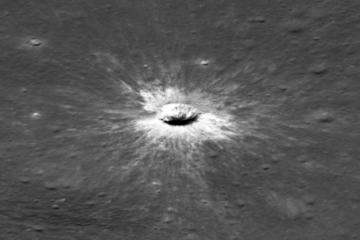
A new, naturally-created crater While we’re used to seeing the Moon on a regular basis in the night sky, it’s not so often that it…
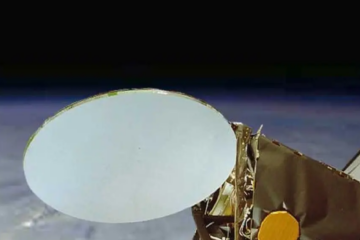
Sweden’s long-serving satellite re-enters through Earth’s atmosphere After 25-years orbiting Earth, Sweden’s Odin scientific research satellite re-entered our atmosphere, burning up as it did, on…