The present and near-future Moon
Artemis II rescheduled and future asteroid-Moon collision a miss
On 9 March I wrote that the Artemis II mission to the Moon had been delayed, again, until a future date as-yet-to-be-determined. After a recent two-day-long assessment, known as the Flight Readiness Review (FRR), NASA has decided that they will launch four astronauts for a historic trip to and around Earth’s natural satellite with a first-opportunity date of 1 April. If it turns out it doesn’t happen on that day, for example due to bad weather, then there are follow-up alternative dates from 2, 3, 4, 5, 6 and 30 April.
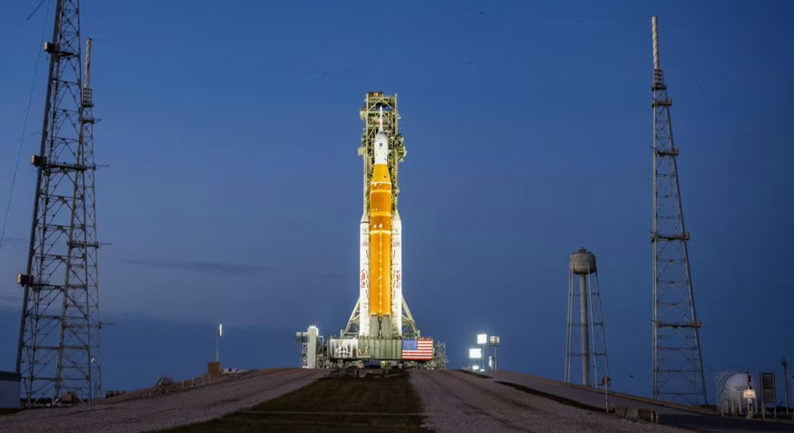
Here we can see the Artemis II stack at launch pad 39B, the Space Launch System rocket (SLS) with the Orion spacecraft and the European Service Module sitting at the very top, back in January. The orange, central tank containing the liquid fuels, and the two white solid fuel boosters alongside it can easily be seen.
What is a little unusual in this “go” assessment was a missing specific valuation, expressed as a ratio, on the chances of success for the mission. This was routine in the days of NASA flying their fleet of five space shuttles 135 times, but now they feel that divulging such a number may not have “any meaning in reality.” When Artemis I, the first flight of this rocket system and the unmanned Orion crew module, was to take place, the risk was given as 1 chance in 125 that the Orion spacecraft would be lost.
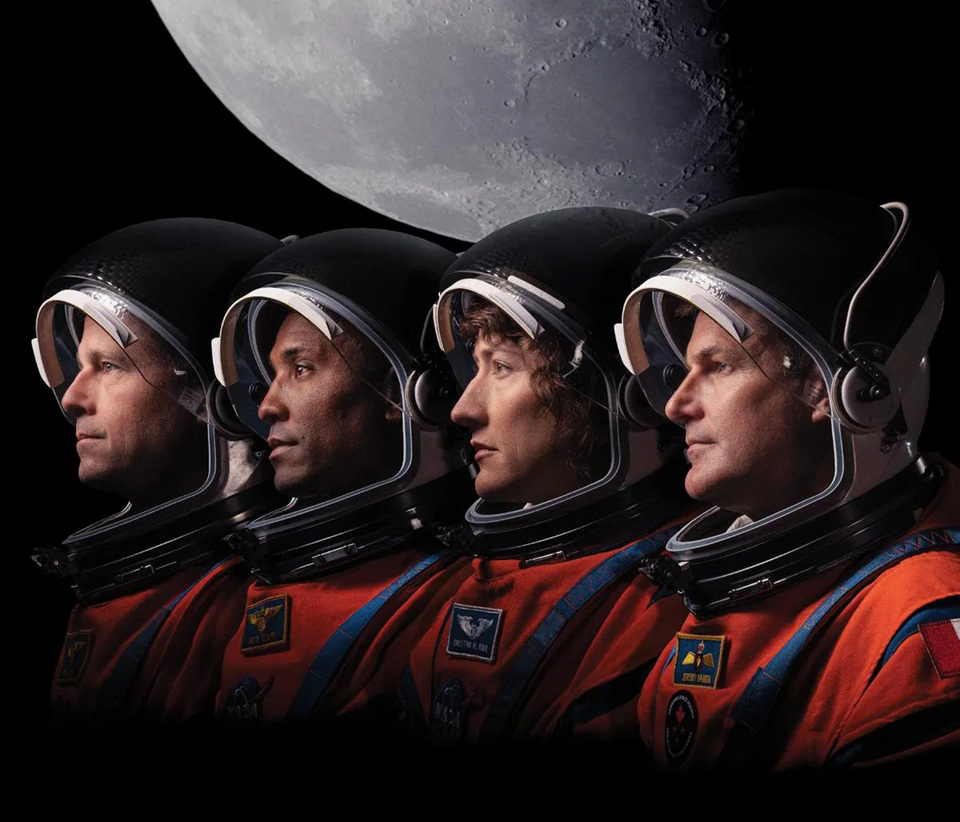
This is the same vehicle that a crew of four astronauts, three Americans and a Canadian, will fly to the Moon. April’s planned flight is also only the second time that the SLS will be used as a booster. To put it another way, NASA is saying there isn’t enough data to calculate a risk assessment for the mission. As far as this undertaking goes, not only does the crew have to take off from Earth, but also fly to the Moon, loop around it, return home again, re-enter through the atmosphere and then splashdown in the Pacific Ocean. The trip both to, and from, Earth’s only natural satellite takes four days just on their own. Might you be finding yourself asking the question whether or not you would be willing to participate in such a mission?
Keep your fingers crossed, and I’m not fooling, that all goes as planned on 1 April. This also means that you still have some time to get your name entered on a digital “boarding pass” to be carried inside the Orion capsule during the flight.
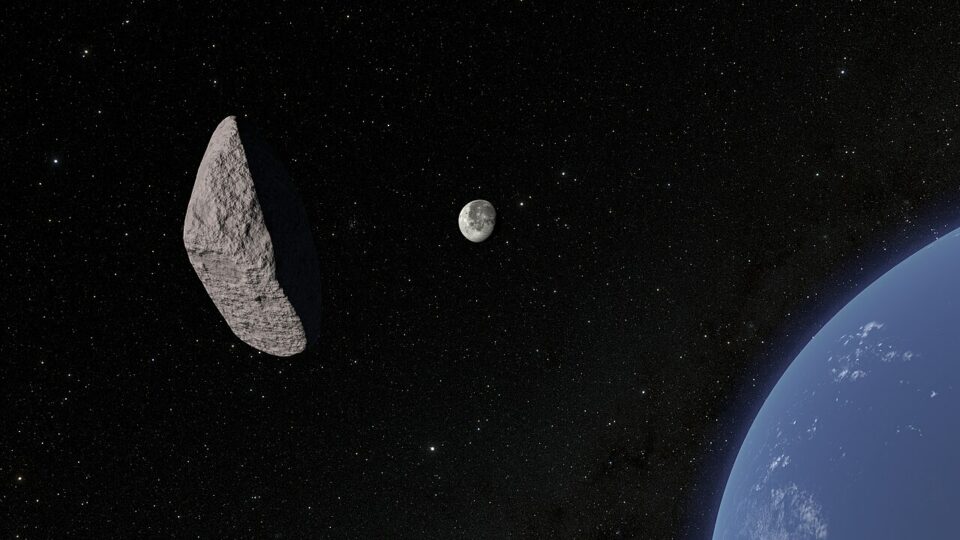
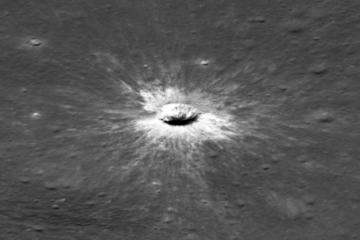
Switching topics and going less-than-six-years into the future, I had covered back on 14 November 2025 the possibility of an asteroid, named 2024 YR4, colliding with the Moon, which would create a new small crater on its surface. This artist’s concept shows it passing safely by Earth on its way to its “moment of destiny.” About 60 meters across, this event had a 4.3% chance of happening on 22 December 2032. A set of two new observations made by the James Webb Space Telescope (JWST) in February have refined the asteroid’s position, determining it will in fact miss the Moon by some 21,000 km (± 2,300 km).
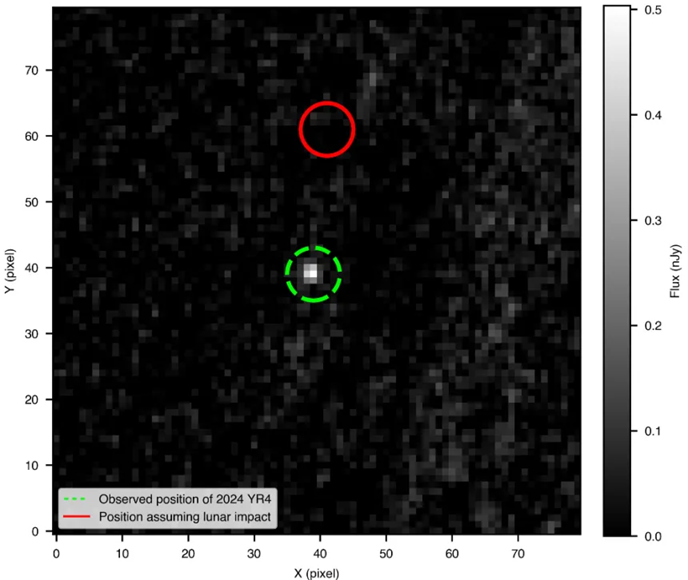
In this image from JWST. we can see 2024 YR4 inside the green circle. The red circle above it shows the position it should have been in if the 22 December 2032 impact with the Moon would have been a reality. Again, this is the current evaluation of the situation; keep in mind there was once a chance this asteroid and Earth could have had an encounter when it was first discovered, though refinements of its position ruled that out. 2024 YR4 will come back into our “neighborhood” in 2028, and you can be sure there will be additional observations made to learn more about this rocky little intruder.
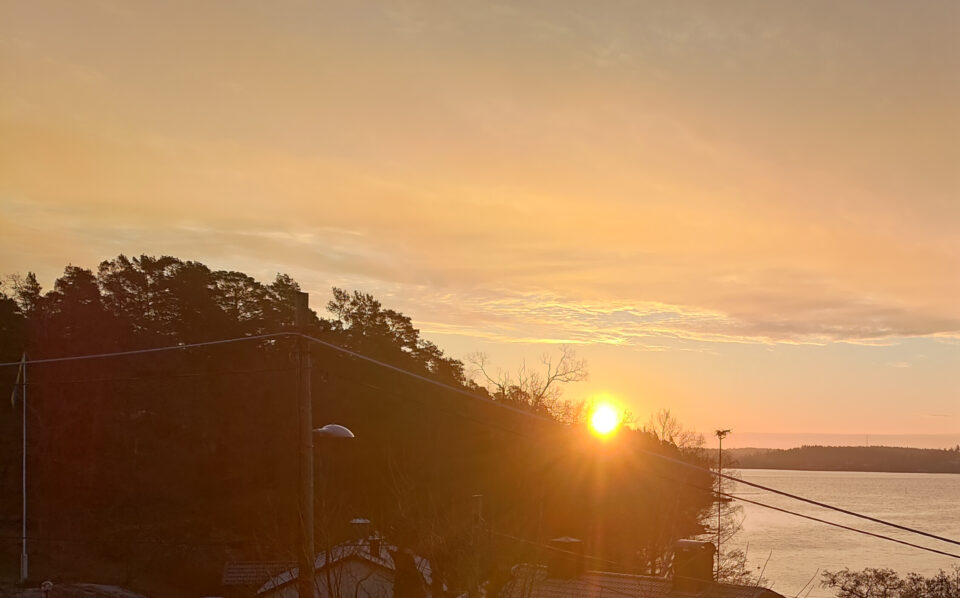
Last, but certainly not the least, the first day of spring, also known as the Vernal Equinox, took place on 20 March (shown here at dawn) at 15:46 CET. You have no doubt noticed that sunrise has been occurring earlier and earlier each day, with sunsets coming later and later. If you are paying really close attention, you might have also observed that the length of days and nights this time of year are almost the same length; the meaning of the word “Equinox,” or “equal nights and days.” And don’t forget that here in the EU we switch over to summer time (CEST), moving clocks ahead one-hour, during the night of Saturday/Sunday 29 March!
By: Tom Callen